Signed in as:
filler@godaddy.com

Indigo buntings are nocturnal migrators, which means they fly at night, using the stars to guide them. They are also unique in that their blue color comes from the structure of their feathers and not pigment.

Black-Bellied Whistling Duck is also known as the “Mexican Squealer” due to their high pitched whistle. They are also known to be very monogamous and pair with the same mate for many years.

Blue Jays are very sociable and intelligent birds. Some studies out there have also found that they are able to recognize human faces similar to ravens and crows. In captivity they have even been seen to mimic human voices, meowing like cats, as well as using tools! Talk about adaptability!

Great Tailed Grackles are known for their loud vocalizations, opportunistic diets, and ability to thrive in urban environments. They also exhibit intelligence, learning, and problem-solving skills, as demonstrated by their ability to solve the Crow and the Pitcher puzzle.

Cooper's hawks are ambush predators, known for their "stealthy" hunting style, moving silently from perch to perch before launching a surprise attack on their prey. While typically they are known to eat birds, small mammals like squirrels/chipmunks, as well as snakes and reptiles occasionally make the menu.

The humming sound that ruby-throated hummingbirds make comes from their wings beating so quickly. Their wings move like oars, and they can move them backward and sideways.

Titmouse pairs often stay together for more than one breeding season and, unlike most related species, young Tufted Titmice often remain with their parents during the winter, not dispersing until later in their second year. Some immature Tufted Titmice even assist their parents in raising their next brood.

Northern Mockingbirds continue to add new sounds to their repertoires throughout their lives. A male may learn around 200 songs throughout its life. They sing all through the day, and often into the night. Most nocturnal singers are unmated males, which sing more than mated males during the day, too.

In spring and early summer male and female northern cardinals are obsessed with defending their territory against any intruders. Birds may spend hours fighting these intruders without giving up. A few weeks later, as levels of aggressive hormones subside, these attacks should end (though one female kept up this behavior every day or so for six months without stopping).

The Ruby-crowned Kinglet is a tiny bird that lays a very large clutch of eggs—there can be up to 12 in a single nest. Although the eggs themselves weigh only about a fiftieth of an ounce, an entire clutch can weigh as much as the female herself. Metabolic studies on Ruby-crowned Kinglets suggest that these tiny birds use only about 10 calories (technically, kilocalories) per day. They may be small but they are mighty indeed!

Purple Martins roost together by the thousands in late summer, as soon as the chicks leave the nest. They form such dense gatherings that you can easily see them on weather radar. It’s particularly noticeable in the early morning as the birds leave their roosts for the day, and looks like an expanding donut on the radar map.

Much of the time, robins are monogamous, but they will occasionally switch partners during a nesting season. Robins can build nests on porches and in rafters and may return to it every year during nesting season, so they are sometimes found close to human activity.

Red-Bellied Woodpeckers climb trees by hopping and using their tail for support, a method called hitching. They also have tongues that can extend two inches past their beaks and are barbed at the end which help them extract prey.
Cedar Waxwings with orange instead of yellow tail tips began appearing in the northeastern U.S. and southeastern Canada in the 1960s. The orange color is the result of a red pigment picked up from the berries of an introduced species of honeysuckle. If a waxwing eats enough of the berries while it is growing a tail feather, the tip of the feather will be orange.
Laughing gulls are known for their distinctive laugh-like calls and are opportunistic omnivores and scavengers, meaning they eat a wide variety of foods including fish, insects, and even garbage. They are also social birds that nest in large colonies and have been observed to be clever in finding food, even stealing from other predators like pelicans.
Summer tanagers are known for their predilection for bees and wasps, catching them in flight and removing their stingers before eating them. They are often found foraging high in the forest canopy, sometimes flying out to catch insects in flight.
House sparrows are adaptable birds found worldwide, known for their ability to thrive near humans. They are social and can be found in groups, often foraging for food in urban areas. House sparrows are also known for their aggressive territoriality, defending their nests and even attacking other bird species.
Most members of a winter flock stay in the same flock all season, but some birds are “flock switchers.” Some of these belong to one flock and then switch, joining another flock permanently and exclusively for the rest of the season. Other flock switchers regularly move between flocks. These flock-switchers may have different rankings in the hierarchy of each flock.
American Redstarts are incredibly active, constantly foraging for insects by gleaning from foliage and catching them in mid-air. They often spread their tails, flashing the bright orange or yellow to startle and attract insects, making them easier to catch.
Rose-breasted grosbeaks are known for their beautiful plumage, particularly the male's striking red-and-white breast and black hood. They are also skilled fliers, capable of crossing the Gulf of Mexico without stopping. Their nests are often built high in trees and are sometimes parasitized by Brown-Headed Cowbirds.
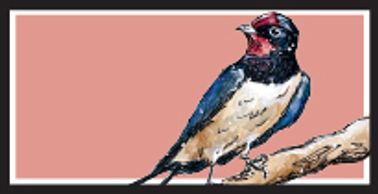
Barn Swallows are important for their role in insect control and as a food source for predators. One notable fact is that Barn swallows are known for building their nests from mud and grass, often under man-made structures like barns, bridges, and eaves.

Cormorants live a long time, and some of the older cormorants would keep fishing even without the rings and tethers. Into the 20th century in Macedonia and Greece, fishermen used captive cormorants to herd fish toward their nets.

While primarily carnivores, they eat a wide range of prey, including crustaceans, frogs, snakes, and even small turtles. They've been observed using twigs to lure prey out of hiding. Unlike other night-herons, they can be active during the day as well as at night.

Magnolia Warblers are known for their distinctive black and yellow markings, especially the males, and their habit of foraging in dense conifer forests. They are named after the magnolia tree, although they prefer other types of trees.

You'll also be first to know about new blog posts, collaborations, merchandise, freebies and more!