Signed in as:
filler@godaddy.com
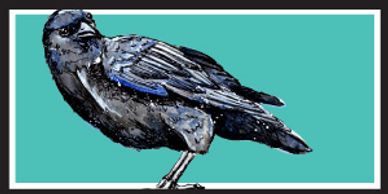
Crows are known to be among the most intelligent birds, with a brain-to-body ratio that's only slightly less than humans. They can count, identify specific objects, and use tools in complex ways.

Goldfinches are among the strictest vegetarians in the bird world, selecting an entirely vegetable diet and only inadvertently swallowing an occasional insect. Whenever they fly south in winter they follow a pattern that seems to coincide with regions where the minimum January temperature is no colder than 0 degrees Fahrenheit on average. Now that's some impressive planning!

Much of the time, robins are monogamous, but they will occasionally switch partners during a nesting season. Robins can build nests on porches and in rafters and may return to it every year during nesting season, so they are sometimes found close to human activity.

Black-billed magpies are known for being intelligent and can perform tasks that require perspective taking. They can mimic human voices, recognize themselves in a mirror, and recognize individual human faces.
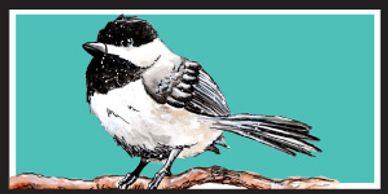
Every year in the fall, Black-capped Chickadees allow their body to rid the brain of neurons that store old, useless information (like old, unused food hiding places!)
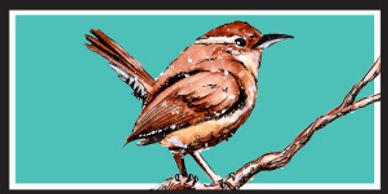
Male Carolina wrens can sing up to 40 different songs and sing up to 3,000 times in a day. They often sing in duets with their mates, with the female providing a chattering note. Their songs are used to attract mates, defend their territory, and maintain their pair bond.

Mourning doves drink water by sucking it up, unlike other birds that fill their bills with water and tilt their heads back to drink. They can also drink brackish spring water without becoming dehydrated.
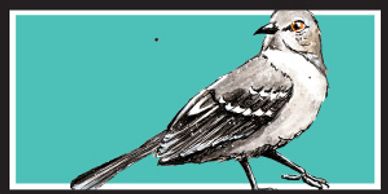
Northern Mockingbirds continue to add new sounds to their repertoires throughout their lives. A male may learn around 200 songs throughout its life. They sing all through the day, and often into the night. Most nocturnal singers are unmated males, which sing more than mated males during the day, too.
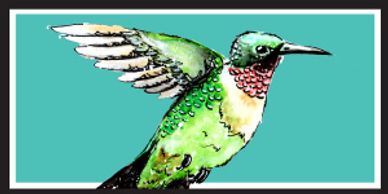
The humming sound that ruby-throated hummingbirds make comes from their wings beating so quickly. Their wings move like oars, and they can move them backward and sideways.
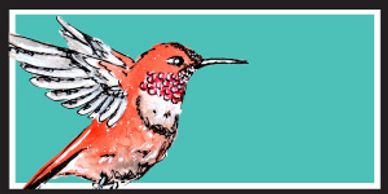
The female Rufous Hummingbird builds a nest made of soft materials like spider webs, moss, and plant fibers. The nest is flexible so it can stretch as the young grow. The female lays two eggs, which are about the size of shelled peanuts.

Titmouse pairs often stay together for more than one breeding season and, unlike most related species, young Tufted Titmice often remain with their parents during the winter, not dispersing until later in their second year. Some immature Tufted Titmice even assist their parents in raising their next brood.
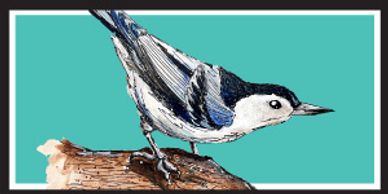
There are three distinct populations of white-breasted nuthatches across the continent: Eastern, Western (mountains), and Pacific Coast. Each population has slightly different appearances and calls, and some researchers consider them to be possibly three species.

House Wrens are known for nesting in many unusual places, including birdhouses, old hats, planters, shoes, and laundry hanging out to dry. They are also known to compete fiercely for nesting sites, sometimes harassing larger birds.
Dark-eyed Juncos are often called “Snowbirds,” possibly due to the fact that many people believe their return from their northern breeding grounds foretells the return of cold and snowy weather.
Unlike robins and many other fruit-eating birds, Baltimore Orioles seem to prefer only ripe, dark-colored fruit. Orioles seek out the darkest mulberries, the reddest cherries, and the deepest-purple grapes, and will ignore green grapes and yellow cherries even if they are ripe.
Blue Jays are very sociable and intelligent birds. Some studies out there have also found that they are able to recognize human faces similar to ravens and crows. In captivity they have even been seen to mimic human voices, meowing like cats, as well as using tools! Talk about adaptability!
The Song Sparrow is found throughout most of North America, but the birds of different areas can look surprisingly different. Song Sparrows of the Desert Southwest are pale, while those in the Pacific Northwest are dark and heavily streaked. Song Sparrows of Alaska’s Aleutian Islands chain are even darker, and they’re huge: one-third longer than the eastern birds, and weighing twice as much.
Most members of a winter flock stay in the same flock all season, but some birds are “flock switchers.” Some of these belong to one flock and then switch, joining another flock permanently and exclusively for the rest of the season. Other flock switchers regularly move between flocks. These flock-switchers may have different rankings in the hierarchy of each flock.
All the European Starlings in North America descended from 100 birds set loose in New York's Central Park in the early 1890s. The birds were intentionally released by a group who wanted America to have all the birds that Shakespeare ever mentioned. It took several tries, but eventually the population took off. Today, more than 200 million European Starlings range from Alaska to Mexico, and many people consider them pests.
In spring and early summer male and female northern cardinals are obsessed with defending their territory against any intruders. Birds may spend hours fighting these intruders without giving up. A few weeks later, as levels of aggressive hormones subside, these attacks should end (though one female kept up this behavior every day or so for six months without stopping).
Downy woodpeckers create nest hole openings that are hidden by fungus or lichens. Their clutch size is 3-8 eggs, which are completely white. The incubation period is 12 days, and the nestling period is 18-21 days.
Early in the breeding season, male Spotted Towhees spend their mornings singing their hearts out, trying to attract a mate. Male towhees have been recorded spending 70 percent to 90 percent of their mornings singing. Almost as soon as they attract a mate, their attention shifts to other things, and they spend only about 5 percent of their time singing.
Steller’s Jays were discovered on an Alaskan island in 1741 by Georg Steller, a naturalist on a Russian explorer’s ship. When a scientist officially described the species, in 1788, they named it after him.
The red of a male House Finch comes from pigments contained in its food during molt (birds can’t make bright red or yellow colors directly). So the more pigment in the food, the redder the male. This is why people sometimes see orange or yellowish male House Finches. Females prefer to mate with the reddest male they can find, perhaps raising the chances they get a capable mate who can do his part in feeding the nestlings.

You'll also be first to know about new blog posts, collaborations, merchandise, freebies and more!